Crooked Nose Correction: Causes, Treatment, and Surgical Options
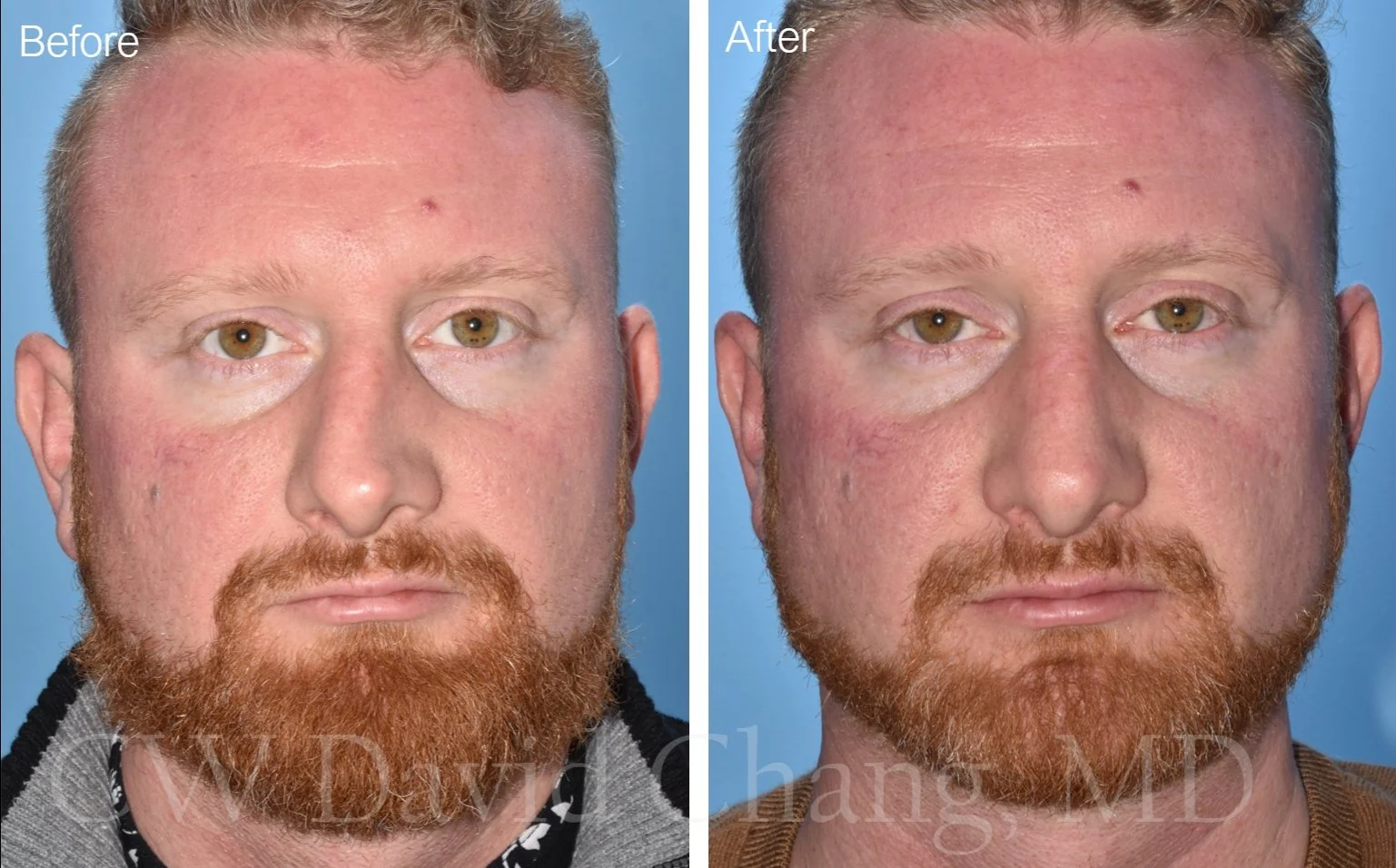
Sometimes a rhinoplasty (or a nose job, in colloquial parlance) may be performed to restore function and/or address trauma. Functional rhinoplasty refers to performing a nasal surgical procedure that involves modification of the external structures of the nose to improve its ability to permit easier passage of air flow. Structural issues that can compromise function can be congenital (innate to how the nose developed), trauma induced, or a consequence of aging.
In this case, we straightened the nose in an effort not only to improve aesthetics but also breathing. When tackling such a challenge, it is helpful to determine what components—bony bridge, cartilaginous dorsal, nasal tip—are creating the crooked appearance. Upper lateral cartilages were released to free the dorsum from influences resisting change. The concave cartilaginous dorsum was “filled in” using a left spreader graft. A “clocking suture” pulled the cartilage dorsal complex to the left before fully reattaching the upper lateral cartilages.
Making a deviated nose perfectly straight is an impossible task. Perfection lies in the hands of God. However, in striving for excellence, I hope to come closer.
